Friday, September 2, 2016

Snow View in September

I went in search of discounted plants today, but didn't find anything I really liked. However, I did come across a small Yukimi-dōrō, or snow-view lantern.


These lantern tend to be ornamental only, and are often associated with water. They are placed near ponds and can be placed at the water's edge or on a flat stone directly in the water. In the winter snow will accumulate on the roof, hence the name. 

The one I purchased has four legs and is made of granite. Most of my other stone lanterns are more of a pink granite, so this bright white granite lantern should add some variety. 


I don't have a pond or water feature, so I am placing it in the stroll garden near the dwarf maple I planted last year. Perhaps the large gravel area at the end could be considered a "water" feature. 


I'm not sure if I will keep it in this location long term. I have to wait and see how the plants in this area do. I plan to transplant some more lilies later in the month to just behind the lantern along the fence. I also have a small grass plant to transplant. 

More importantly, I am worried about the maple. I have begun to call him "sicky" due to how poorly he has been doing. When I first planted him he was full of leaves. 


He quickly lost half his growth. I also may have over trimmed him and exacerbated the shock. I was sure he was dead by the time last winter set in. However, to my amazement, he came back to life in the spring and was doing well. 


However, upon my return from Oklahoma, after almost 5 weeks, he was is a disastrous state. The heat of summer didn't help. He may also be getting too much direct sunlight. I've removed most of the dead leaves, but I am going to leave the branches and stems alone and see what transpires next spring. If he continues to get worse he may have to come out. I can try moving him, but the shock of digging him up might kill him once and for all. We will have wait and to see. 


In the meantime, I am hoping the Yukimi-dōrō will add some interest to a sickly plant.


Thursday, August 25, 2016

Planting Azalea

just as wonderful
as the expensive garden stone...
azaleas 
- Issa 

I haven't been around much this summer to take care of the garden - stuck in Oklahoma for a while and visiting other gardens (see other Augusts posts). 

Now that I'm back home, it was time to straighten up the garden. First, I purchased some plants to replace those that had died or were eaten. 


I started with the removal of a long-term plant, Daylily (Hemerocallis “Black Eyed Stella’). These Daylily had been in the central part of the garden since 2010. 


Although they never received as much sunlight as I had hoped, they always flowered and added a nice burst of yellow color to the overwhelmingly green garden. Unfortunately, after almost seven years, something decided to eat the bulbs of the plants, leaving them completely decimated. This has been a persistent problem these last couple of years, but it mostly impacted Hosta. Now I have lost a prized set of plants. 

In order to avoid this problem in the future, I have decided to plant this spot with a small Azalea (Rhododendron 'Farrow')


It will need sun to part shade, and should grow to only about 24" x 24", a perfect fit for this location. I can also control its growth so it does not crowd out other nearby plants. If all goes well, I should be able to get a red-pink flower in the spring. 

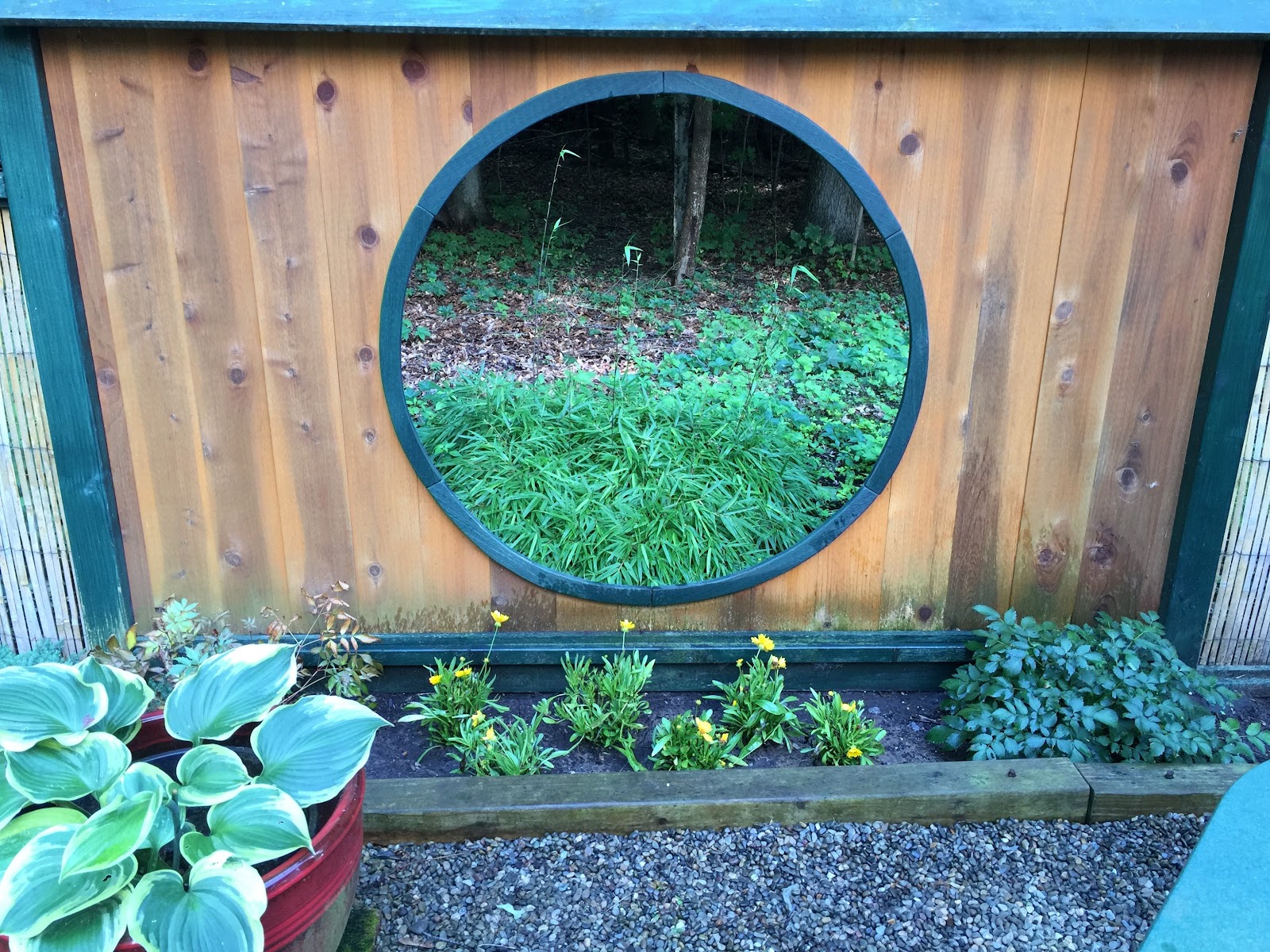
I also need to clean up the space directly in front and below the moon window fence panel. In the past I had planted Mouse Ear Coreopsis 'Nana' in this location and they looked great, especially when they flowered. 


However, over time they failed to spread and instead diminished. This spring I was forced to remove what was left. In their place, I planted some Tickseed 'Presto' (Coreopsis grandiflora)


They should grow no more than 6-8" in height. We will have to see how they do in the spring and if they will receive enough light in this space. 

Finally, the two Carex 'Silver Scepter' Japanese Sedge Grass plants I placed in front of the gate entryway did not return this year. 


One completely died, while the other only produced a few strands of grass. I even waited most of the summer to give them time to grow, but in the end, it was a lost cause. I bucketed what remains of the remnant and will try to salvage it for future use. 

Unable to find the same plants (I really liked the structure), I instead replaced them with a Japanese Sedge Grass 'Evergold' (Carex oshimenis)


Not actually my favorite in terms of structure or color, but still similar. Most importantly, they were on sale. I will give these a try and see how they do after a year. 

I still have one more Azalea to plant, but I have not yet determined where it will go - I will save it for a future post.

Friday, July 15, 2016

Blue Bird Takes Flight

The Delphinium ‘Blue Bird’ perennials I planted bloomed earlier than I had expected. The blur color is fantastic and adds some more diversity to the garden.


However, the height of the plant far exceeded what I thought it would achieve. As a result, I will need to move the one on the northern side of the garden to along the fence line. Its just too tall and seems out of place. 


Also, as the plant, once it flowers, needs support in the form of a brace to keep the flowers from tipping over, especially after it rains. In the long term, I made to move these to other locations in the garden that get more sunlight. Perhaps at the far end of the stroll garden, the sunniest part of the property.

Wednesday, July 13, 2016

Pom Pom Intervention

The Boulevard Cypress Oriental Pompon (Chamaecyparis pisifera "Cyano-virdis') did not do well over the winter. Honestly, I have had little luck with this Cypress ever since I purchased it. 

We had very little snow over the winter and a spring with little rain. As a result, the soil was very dry. By the time I got around to showing the Cyprus some kindness, it was about 80% dead.


Rather than yank it out of the ground, I wanted to see if I could salvage it. I started by trimming away all of the dead material. As a result, it has lost any resemblance to having once been a pom-pom.


Its not 100% dead, but it is one very sad sight to behold. Perhaps its sad look will give it some character. Honestly, I don't see how it can make it in the long term, but until I have a new plan or plant in mind, I am going to let it try and save itself. We will see how it does.


Friday, June 17, 2016

More Additions

I added some new plants to the garden this week to help fill in some small voids and perhaps add some color to predominantly green garden. 

After removing a Hosta that had been half-eaten by critters, I decided to plant a ‘Pink Lightning’ Dwarf Astilbe (Astilbe simplicifolia). This plant will grow to about 18” in width to 20” in height and will bloom mid summer with a large pink plume. At the time of planting, the plume was already present. 


The plant likes part to full shade, so it should do well on this side of the garden. I am also hopeful that it will not prove to yummy for the critters that seem to like eating my Hosta.

Nearby, I also added a Delphinium ‘White/Dark Bee’ perennial. This upright plant has spikes of white flowers with dark centers. It likes sun to partial shade, so I will have to see how well it does on this more shady spot in the garden - it might get just enough light to help it last long term. 


Hopefully it will survive any attacks by slugs. I really like the flowers and think the white can add some diversity to the colors of the garden. I also placed an additional plant on the opposite side of the Japanese Maple.


Along the northern, more sunny side of the garden, I planted a Delphinium ‘Blue Bird’ perennial. This plant will bloom in June and maybe September, so I may not get the bloom until next season, but once it appears, it could be a bright blue. 


 I also placed an additional plant just behind the ‘Pink Lightning’ Dwarf Astilabe - adding some blue here might balance off the white and pink.


I placed this plant midway down the slope so that the plant will not grow too high above the edge of the walkway. I like to keep this side of the garden level with the walkway.

One of my long term Hosta (Plantain Lily ‘August Moon’) located next to the Japanese Maple was half eaten. As a result, I decided to remove it and bucket it up in an attempt to salvage it for re-use elsewhere. I was unhappy becuase this Hosta had been there since 2009. I am definitely having more trouble this year with woodchucks who seem to be entering the garden and eating away at my plants, something they had not done in the past, at least not at this level in the garden. In place of the Hosta, I moved the Corabell I planted last fall out from under the shade of the Maple and into the more open space where the Hosta had once been. 


This should allow the plant to do better and continue to grow.


Friday, May 27, 2016

Purple Paradise

As the month of May winds down, the Bugleweed (Ajuga reptans, 'Burgundy Glow') in the garden was bringing some much needed early color to the garden.


It has taken a couple of years after transplanting these plants from elsewhere in the garden to finally fill in the area in front of Buddha and near the Gazebo end of the garden's south side. 


The purple color looks fantastic. In another years time both areas should be completely filled in. At that point I can take clippings and starting adding elsewhere (I have to be careful to keep it in controllable areas so that it does not spread out of control. Also, if you look closely in the picture above, you will see a small Japanese Painted Fern growing at the base of the rock wall. This appeared on its own, blown in last season from an existing plant no doubt. I have decided to let it grow, along with several others that appeared elsewhere. If they get too big over time, I can always relocate.

Sunday, May 15, 2016

Additions and Changes

As spring gets underway, despite the extreme changes in temperature, I added some new planting and made some long put-off changes.

I decided to add one more Variegated Japanese Forest Grass plant to the base of the lantern. I know that they will all grow to a much fuller size in the future, but in the meantime I added the fourth plant I purchased to the base to fill it in better for this season. I can relocate it later as all the plants continue to grow.


I was also concerned about the Variegated Stonecrop (Sedum 'Veriegatum') I had planted last year in the corner between these grasses and the spirea. So, I moved it closer to the door step and replaced it with part of the Happy Returns Daylily (Hemerocallis) I spit from within the garden - although these were originally dwarf lilies, over the years they have grown substantially. I moved one plant last year. This year I split them again, leaving half behind near their original location and moving the other half to this corner. I also reworked some of the stones in the garden around these daylillies and the Beatlemania Mophead Grass.


Additionally, I split some of the hosta in the garden that had become too full last year. I moved them to different locations throughout the garden.


I also added some flowering annuals in different locations - White New Guinea Impatiens, Yellow Tuberous Begonia, and Scarlet Dahlia. If I can keep the slugs away, they might add some much needed color.


Sunday, April 24, 2016

A Foundation of Grass

As the Black Eyed Susan I planted at the base of the meter lantern began to appear, I remembered that I wanted to remove them. Last year I noticed that they did not flower as much as I would have liked. Also, every time I rolled out the garden hose, they would get crushed. 


So, I decided to pick up some Variegated Japanese Forest Grass to place in the location instead. Over time the grass should do a better job of covering over the base of the lantern box and the stones at the base. The Black Eyed Susan plants never really filled in as I had hoped. Initially, I purchased four grass plants, but I chose to plant only three. 


These grass plants have the potential of getting large over time, up to 24 inches in width. That should prove enough to fill the base, but it may take a year or two.

Sunday, April 17, 2016

Moss Garden

...you had never dreamed of such green, 
such shades, such softness
velvet elegance in the dappled light of afternoon...
Jan Haag

It finally warmed up enough to start some early spring clean-up and planting. After raking up many twigs and branches that fell into the garden and across the property, I was able to get to work on transplanting moss.

Moss had been growing in my wife's vegetable garden since last fall, and also along the edge of the back yard where water drains from some sump-pump pipes. It was relatively easy to collect the moss and transplant it into the two beds within the stroll garden on the far side of the garage.


These two beds were created a couple years back when I reworked this area. At the time, I didn't have a lot of moss to fill in the two small beds. Instead, I just placed mulch there. I never liked the way the mulch looked and hoped that I would one day be able to plant some moss. After my trip to Japan last summer, I was motivated to make it happen - some of the moss gardens I saw in Japan were fantastic. 


I was hoping to develop a bit of that esthetic in my own garden. Unfortunately, I was dealing with two different types of moss - I am no expert, but clearly the moss from the vegetable garden was different. The color, texture, and shape were not the same as that from the backyard property line, an area that gets more shade. So, I used what I could from the vegetable garden moss to fill in the smaller of the two beds. 


I then used what was left to start the larger of the two beds. I then had to mix in the moss from the backyard to fill in most of the larger bed. However, I didn't have enough of either to complete the entire bed. About one-third of the bed remains unplanted.


I will need to look for an additional source, preferably local, perhaps from a neighbor. I can also try a moss-growing mixture that I can spray on to see if that encourages new growth.

Overall, I am happy with the look, especially the brighter moss from the backyard in the larger bed. I will continue to keep it moist with water to ensure it takes hold. I only hope that the beds don't get to too much sunlight. I don't want the moss to dry up and die. Only time will tell.